 |
Fast Facts:
- At the height of the South Side’s glassmaking industry in 1876, the neighborhood was home to 76 glass factories.
- The South Side was once home to five inclines that carried passengers and freight up to “the Slopes.”
- The current site of the South Side Works shopping and residential development was once home to the Jones & Laughlin and LTV steel mills. In the late 1960s, nearly 8,000 people worked at the plant.
- 44,645 individual steps add up to 712 sets of public stairways (24,108 vertical feet) in the South Side Slopes and Flats.
Cheap Thrills:
- Dive into the South Side arts scene at LaFond Galleries, the Brew House, or Silver Eye Center for Photography. Each space frequently kicks off exhibits with free opening receptions.
- Indulge in a milkshake or a sundae with the works at Chocolate Celebrations, a candy store and old-time ice cream parlor under one roof. (1705 East Carson Street).
- Mix a little retro chic into your wardrobe with clothing and accessories from the South Side’s thrift and vintage clothing stores.
Spare No Expense:
- Uncork a bottle of the best during a European fine dining experience at restaurants like Café Allegro, Le Pommier, and Dish.
- Book the best seats in the house at City Theatre, a local favorite for contemporary theatre productions.
- Amp up your wardrobe with the latest styles from South Side boutiques such as Roberta Weissburg Leathers, Original Cin, Jupe, and Torque Denim.
Special Events:
- Warm up with the neighborhood’s best soup offerings during the South Side Mid-Winter Soup Contest featured every February on President’s Day Weekend.
- StepTrek offers a different point of view—and a workout! In early October, join other able-bodied citizens on a hike up the city steps from the South Side Flats to the Slopes. Organized by the South Side Slopes Neighborhood Association.
- On the first weekend of every June, South Side residents invite visitors to view their inventive preservation of Victorian homes and courtyard gardens on the Historic South Side Home Tour.
South Side
A neighborhood once known as the “Workshop of the World,” the South Side is now one of Pittsburgh’s favorite playgrounds. Join locals who come here to spend their hard-earned leisure time - you’ll find no shortage of recreational choices. Quiet coffee shops and bookstores? Check. Live music, art exhibits, theatre productions, and new release films? Got it. Biking trails and boat launches? Yes, the South Side has that covered, too.
And if you’re hungry (or thirsty)--well, we could go on forever. With more than 75 restaurants and bars, the options cover everything from old-fashioned pierogies to modern Japanese steakhouses. Same goes for shopping, where you can score everything from designer denim to eco-friendly home décor. Within 20 walkable blocks, the South Side serves up an unsurpassed urban vibrancy.
History
By George, we’ve got it! The South Side got its start in 1763, when King George III of England rewarded John Ormsby for his service in the French and Indian War by granting him 2,400 acres of land along the southern banks of the Monongahela River. Ormsby divided the land into four boroughs--South Pittsburgh, Birmingham, East Birmingham, and Ormsby - which were annexed to the City of Pittsburgh in 1872.
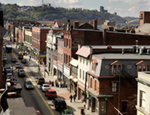 Much of the area we now call the South Side Flats was originally the village of Birmingham, a community history that is commemorated with a mural at the corner of 12th and East Carson Streets. Dr. Nathaniel Bedford, Ormsby’s son-in-law, planned the community and named its streets after friends and family. Many of the streets pay tribute to the women in his life, including Jane (his wife); Sarah, Jane, and Sidney (her sisters); and Josephine (his daughter). Carson Street honors a seafaring friend in Philadelphia, and at Bedford Square, Nathaniel secured himself a place in history.
As you cross Carson Street at 17th Street, you’ll notice a widening of the road. This marks the boundary between the old villages of Birmingham and East Birmingham. Could East Birmingham planners of the late 1800s have predicted the value of on-street parking?
Like many Pittsburgh neighborhoods, the South Side grew to keep pace with the city’s industrial boom, giving it the nickname of the “Workshop of the World.” Glassmaking was the predominant industry in the early 1800s. In the latter part of the century, the banks of “the Mon” became the site of Pittsburgh’s mighty iron and steel operations, and the adjacent Flats and Slopes became the home of industrious immigrant populations who labored there. A new generation of Americans arrived from Germany, Ireland, Poland, Lithuania, the Ukraine, and the Slavic nations. They built their own schools and churches so to continue their native customs and speak their native languages.
Today, we think of the South Side in terms of two communities. The most popular visitor spot is the low-lying “South Side Flats,” a neat grid of renovated Victorian rowhouses with the Carson Street business district at its center. But the hills that tower above the Flats are just as interesting, albeit quieter. Lace up your walking shoes and trek up 18th Street to the “South Side Slopes.” Here, the homes cling to the hillsides for views of the compact action of the Flats and the skylines of the “Downtown” central business district and Oakland.
“Old Guard and Avant Garde”
One could assert that the South Side’s history of ethnic diversity is what set the stage for today’s cultural eclecticism, which has been described as a blend of the “Old Guard and Avant Garde.” Just like the community’s early days, people from all walks of life find a place for themselves on the South Side, making East Carson Street one of the best people-watching spots in the city. Perch yourself in the front window seats of one of the district’s coffee shops or restaurants and you can watch senior citizen residents, Ukrainian priests, tattooed punks, and urban hipster office workers roll by in a vibrant parade of humanity.
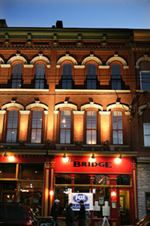 It’s diversity that keeps the East Carson Street business district buzzing, too. The district is punctuated at each end by the large-scale shopping complexes Station Square and South Side Works, which each include a mix of locally owned businesses and national chains. What gets really interesting is the span between 10th Street and the Birmingham Bridge. Here, tucked into beautifully restored Victorian-era storefronts, you’ll find ethnic dining from Cambodian to Ukrainian; chic fashion shops and thrift stores; and sophisticated wine bars and friendly neighborhood “shot-and-beer” joints.
For a self-guided walking tour that illuminates local history and architecture, visit the South Side Local Development Company website.
Travel Tips
-
Less than 2 miles from Downtown Pittsburgh central business district
-
Get there by car, bus, or walk from Downtown. The Carson Street business district and adjacent residential areas are flat and easily walkable; a stroll up to the South Side Slopes is a bit more challenging.
-
Mapping? Major streets in and around the neighborhood include East Carson Street and 10th Street. Also accessible via the Birmingham Bridge from Fifth Avenue (from Oakland).
-
Geocaching? Find South Side caches on ZIP Code 15203.
- Metered on-street parking and lots are available throughout the neighborhood. Additional details on parking, ATMs, and more are included in the itineraries.