 |
Fast Facts:
- In 1915, the City of Pittsburgh buried the St. Pierre’s bridge by filling in the ravine below. The bridge stood at the current site of Forbes Quadrangle.
- Oakland is a land of learning, home to three universities (Carlow, Pittsburgh, and Carnegie Mellon); eight middle and high schools, and the School for Blind Children.
- Andy Warhol’s childhood home was located here at 3252 Dawson Street.
- Our favorite neighbor? Mister Rogers, of course. Fred Rogers and non-profit Family Communications produced “Mister Rogers’ Neighborhood” in Oakland at 4802 Fifth Avenue. The family favorite was broadcast from WQED, the nation’s first community-owned (or “public”) television station.
Cheap Thrills:
- Dip into freshly made ice cream from Dave & Andy’s at 207 Atwood Street.
- Recipe for a perfect summer evening: Pack a picnic and perch yourself on Flagstaff Hill in Schenley Park. Watch the sunset, then take in a free screening of a family friendly movie.
- Seat yourself at a café chair at Kiva Han on Craig Street (directly across from the Carnegie Museum of Art) for prime people watching.
- Pull up a chair and relax in Schenley Plaza, located in front of the Carnegie Museum and the Cathedral of Learning.
Spare No Expense:
- Enjoy some of Pittsburgh’s finest dining at Lucca Ristorante on S. Craig Street.
- Take home unique gifts from Maggie and Stella’s on Oakland Avenue.
Special Events:
- Oakland’s universities and cultural institutions are the sites of continual cultural activity, including musical performances, lectures, fiction and poetry readings, art and history exhibits, and more. For a weekly update of event listings, visit Pittsburgh City Paper.
- For every season, there is a flower show. Phipps Conservatory is a hothouse of horticultural activity.
- The Greek Food Festival at the St. Nicholas Greek Orthodox Cathedral feeds crowds with traditional specialties for a week every May.
- The Oakland Farmers Market brings fresh produce and fun into the heart of Oakland every Friday afternoon from July through November. Find it along Sennott Street between Meyran and Atwood Streets.
Oakland
Many of Pittsburgh’s neighborhoods were borne out of the manufacturing of “big steel,” but Oakland has always served as an incubator for big ideas and lofty ambitions. 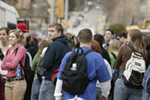 This is Pittsburgh’s educational and cultural hub, and it’s fueled by the youthful energy of the student population at the three universities located here. Although your own student days may be a distant memory, you can absorb the neighborhood’s academic culture in adventurous ethnic dining spots, cozy neighborhood watering holes, and top-notch independent booksellers.
It was here in Oakland that Dr. Jonas Salk developed the polio vaccine, Dr. Thomas Starzl performed the first liver transplant, and a man known as “Mr. Rogers” instilled lessons of self-confidence and compassion into generations of young television viewers. Here, you’ll find plenty of stimulation for your own intellectual pursuits at cultural institutions such as the Carnegie Museums of Art and Natural History or the collections of the Carnegie Library of Pittsburgh. Grab a book, journal, or sketchpad and take to the newly restored Schenley Plaza or the lawn of the Cathedral of Learning, and dream up some big ideas of your own.
History
Oakland is situated on a plateau east of Pittsburgh’s central business district. Like Bloomfield, Oakland was originally a farmland district when settlers arrived in the 1780s and 90s. Throughout the 1830s, the area became populated with some of Pittsburgh’s wealthiest families, who sought escape from disease and blight that were becoming common in the heart of city that we now know as “Downtown.”
The convergence of great wealth, a disappointment with urban quality of life, and new trends in city planning and architecture resulted in a grand vision for Oakland. The stage was set by the contributions of Mary Croghan Schenley. Although a scandalous elopement led her to live abroad for most of her life, this heiress donated 400 acres of her inherited land to the City of Pittsburgh for the creation of a park in 1889.
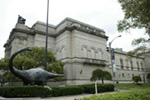 With his characteristic knack for recognizing opportunity, steel magnate Andrew Carnegie extracted 20 acres of the park’s lower end in 1890 for the development of his namesake cultural institutions, including a public library, museum, and music hall. Further fueled with inspiration from the 1893 World’s Fair in Chicago, Carnegie called upon other industry leaders to contribute to the development of a new city driven by thoughtful planning, grand-scale architecture, and a dedication to culture and beauty. Pittsburgh’s wealth rose to the challenge and through the 1920s, Oakland became a living laboratory of an urban design trend called the “City Beautiful” movement. The classically designed plazas, hotels, university buildings, houses of worship, social halls, and cultural institutions built during this period strove to create Pittsburgh’s Acropolis, and the careful preservation of these buildings continues to give Oakland an atmosphere of grandeur today.
Outside of the cultural hub, Oakland’s residential districts grew with minimal planning, and the hills, bluffs, and valleys became home to middle- and working-class residents, including immigrants from Greece, Italy, and most Eastern European countries.
Around the World in a Neighborhood
Today, the major universities and medical institutions (or “eds and meds”) located here draw a global population to the Oakland neighborhood, and even a brief visit gives you the opportunity for multicultural exploration. For an immersion course in world culture, visit the University of Pittsburgh’s Nationality Rooms, where classrooms in the Cathedral of Learning are designed to celebrate the cultural contributions of Americans’ native countries. Off campus, you can taste your way through the global table at nearly 100 restaurants featuring authentic and inexpensive cuisine from around the world.
Travel Tips
-
Less than 4 miles from Downtown Pittsburgh central business district
-
Get there by car or bus.
-
Mapping? Oakland’s major business corridors are Forbes Avenue and Fifth Avenue, which are one-way. Connecting streets include Craig Street, Bigelow Boulevard, and The Boulevard of the Allies. Also accessible via the Birmingham Bridge from Fifth Avenue (from the South Side)
-
Geocaching? Find Oakland caches on ZIP Code 15213.
-
Metered on-street parking, parking garages and parking lots are available throughout the neighborhood. Additional details on parking, ATMs, and more are included in the itinerary. Visit the Only in Oakland website for the best tips on parking near cultural institutions, universities, or the business districts.